Embarking on a life as a digital nomad offers unparalleled freedom, but navigating the complexities of international travel requires careful planning. Among the most crucial considerations is securing comprehensive travel insurance tailored to the unique needs of remote workers. This guide explores top travel insurance providers specifically designed for digital nomads, examining coverage for medical emergencies, evacuation, lost equipment, and other critical aspects of working and traveling abroad.
We delve into the essential factors to consider when choosing a plan, including budget, coverage needs, pre-existing conditions, and activity levels. We also provide practical travel hacks to reduce costs and enhance your overall experience, alongside tips for maintaining a healthy work-life balance while navigating diverse cultures and work environments.
Best Travel Insurance for Digital Nomads
Choosing the right travel insurance is crucial for digital nomads, who often work remotely from various locations and face unique risks. This requires coverage beyond standard travel insurance policies, encompassing the specific needs of a location-independent lifestyle. Factors like equipment protection, extended medical coverage, and potential disruptions to work due to unforeseen circumstances should all be considered when selecting a suitable plan.
Comparison of Travel Insurance Providers for Digital Nomads
The following table compares five leading travel insurance providers, highlighting their coverage relevant to digital nomads. Note that specific policy details and pricing vary based on individual needs and chosen plan. Always review the full policy documents before purchasing.
| Provider | Medical Coverage | Emergency Evacuation | Lost/Stolen Equipment | Work-Related Coverage |
|---|---|---|---|---|
| SafetyWing | Comprehensive medical coverage, including hospitalization and doctor visits. | Medical evacuation included in most plans. | Limited coverage for lost or stolen equipment; often requires add-on. | Offers coverage for lost workdays due to illness or injury. |
| World Nomads | Extensive medical coverage with options for higher limits. | Medical evacuation coverage available. | Coverage for lost or stolen equipment is available, often with a deductible. | Specific coverage for work-related interruptions might require add-ons. |
| Allianz Travel | Comprehensive medical coverage, with various plan options. | Medical evacuation is included in most plans. | Coverage for lost or stolen equipment is available; limits and deductibles apply. | Generally does not explicitly cover work interruptions but may cover related expenses indirectly. |
| Travel Insurance Master | Medical coverage options ranging from basic to comprehensive. | Medical evacuation coverage is often an add-on. | Coverage for lost or stolen equipment is usually an add-on. | Typically does not offer specific work-related coverage for digital nomads. |
| InsureMyTrip | Offers a wide range of plans from various providers, allowing for customized coverage. | Medical evacuation coverage varies by plan. | Coverage for lost or stolen equipment varies by plan. | Coverage for work-related issues would depend on the specific plan selected. |
Specific Benefits for Digital Nomads
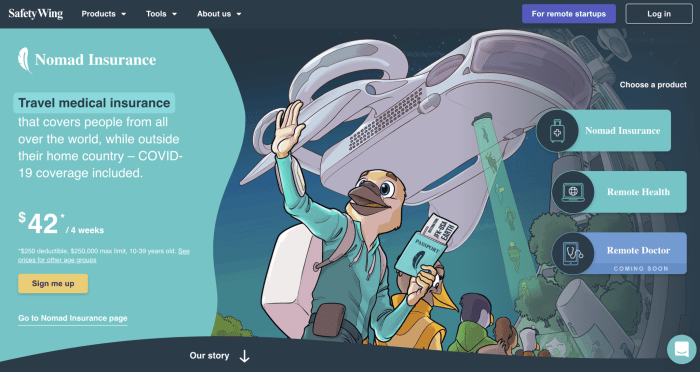
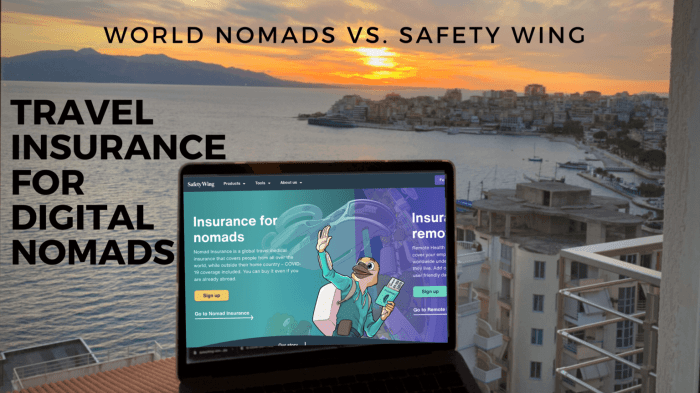
Each provider offers features that cater to the specific needs of digital nomads, although the extent of this coverage varies. For instance, SafetyWing’s emphasis on remote work coverage and its affordable monthly plans make it popular among this demographic. World Nomads provides broader options for customizing coverage to include equipment and work-related interruptions. Allianz Travel, while not explicitly geared towards digital nomads, provides comprehensive medical coverage which is vital for extended travel.
Providers like Travel Insurance Master and InsureMyTrip offer a wide selection of plans, but may require more careful selection to ensure appropriate coverage for remote work situations.
Real-Life Scenarios Illustrating Coverage Needs
Consider these scenarios to understand how different levels of coverage can impact a digital nomad:Scenario 1: A digital nomad falls ill in a remote location requiring medical evacuation. Comprehensive medical evacuation coverage, as offered by SafetyWing and World Nomads, would be essential. A less comprehensive plan might leave the individual with significant out-of-pocket expenses.Scenario 2: A digital nomad’s laptop is stolen, disrupting their work.
World Nomads or Allianz Travel, with their equipment coverage options, would help mitigate the financial impact. Plans without equipment coverage would leave the nomad responsible for replacing the equipment.Scenario 3: A digital nomad experiences a prolonged illness preventing them from working for several weeks. SafetyWing’s coverage for lost workdays would provide some financial relief. Other providers might not offer this specific type of coverage.
Factors to Consider When Choosing Insurance
Selecting the right travel insurance policy is crucial for digital nomads, as it provides a safety net against unforeseen circumstances while working and traveling internationally. A well-chosen plan can safeguard your financial well-being and allow you to focus on your work and adventures without excessive worry. Failing to adequately assess your needs could leave you vulnerable to significant financial losses in the event of an emergency.Choosing the right travel insurance policy requires careful consideration of several key factors.
Ignoring these factors could result in inadequate coverage or unnecessarily high premiums. A thorough evaluation of your individual circumstances is essential to securing the most appropriate and cost-effective protection.
Essential Factors for Digital Nomad Travel Insurance Selection
Before purchasing a policy, digital nomads should carefully evaluate their needs across several key areas. A comprehensive assessment will ensure the chosen policy adequately addresses potential risks and provides appropriate coverage.
- Budget: Determine a realistic budget for your travel insurance. Consider the length of your trip, your planned activities, and the level of coverage you require. Remember that cheaper policies often come with limitations. For example, a budget of $50 per month might suffice for basic coverage in a low-risk region, while $150 per month or more might be necessary for extensive coverage in higher-risk areas with adventurous activities.
- Coverage Needs: Identify your specific coverage requirements. Consider medical emergencies (including repatriation), lost or stolen belongings, trip cancellations or interruptions, and liability coverage. For digital nomads, consider coverage for lost or damaged equipment (laptops, cameras etc.). A comprehensive plan might cover all these, while a basic plan might only cover medical emergencies.
- Pre-existing Conditions: Disclose all pre-existing medical conditions honestly to your insurer. Some policies may exclude coverage for pre-existing conditions, or may require additional premiums or limitations. Failing to disclose this information could invalidate your claim.
- Activity Levels: Your activity level significantly impacts your risk profile. If you plan on engaging in adventurous activities like hiking, scuba diving, or skiing, you’ll need a policy that covers these activities. Standard policies often exclude or limit coverage for extreme sports; specialized adventure travel insurance may be necessary.
- Destination Risks: Research the risks associated with your destination(s). Some countries have higher rates of crime, political instability, or health risks. Choose a policy that adequately addresses the specific risks of your chosen destinations. For example, travel insurance for a trip to Southeast Asia might require different coverage than a trip to Western Europe.
Understanding Policy Exclusions and Limitations
It’s crucial to thoroughly review the policy’s terms and conditions, paying close attention to exclusions and limitations. These specify situations or events that are not covered by the insurance. Common exclusions include pre-existing conditions (unless specifically covered), reckless behavior, participation in illegal activities, and certain types of medical treatments. Limitations may include caps on the amount of coverage for specific events or a requirement to meet certain criteria before a claim can be filed.
For example, a policy might limit coverage for lost luggage to a specific amount, or it might require you to file a police report before claiming for theft. Ignoring these clauses could lead to significant financial burdens in case of a covered event.
Decision-Making Flowchart for Choosing Travel Insurance
A flowchart can visually represent the decision-making process. Imagine a flowchart starting with the question “What is your budget?”. If the budget is low, it leads to a branch suggesting exploring basic plans with limited coverage. A high budget branch might lead to exploring comprehensive plans with broader coverage. The next step might be “What are your planned activities?”.
High-risk activities branch off to specialized adventure travel insurance, while low-risk activities lead to standard travel insurance. Subsequent steps would involve considering pre-existing conditions, destination risks, and coverage needs, eventually leading to the selection of a specific insurance plan. The flowchart visually guides the user through the process, ensuring all relevant factors are considered before a final decision is made.
Travel Hacks for Digital Nomads
Embracing a digital nomad lifestyle offers unparalleled freedom, but smart strategies are key to maximizing your experience and budget. These travel hacks are designed to help you navigate the world efficiently and affordably, focusing on practical solutions that can significantly impact your overall journey. They go beyond the usual travel tips, addressing specific challenges and opportunities unique to remote workers.
-
Leveraging Co-working Spaces and Cafés
Many digital nomads rely heavily on co-working spaces. These spaces offer a professional environment with reliable Wi-Fi, printing facilities, and often, networking opportunities. However, costs can vary significantly. A smart approach is to investigate free options such as cafes with strong Wi-Fi, libraries, or even university campuses (with permission). This can dramatically reduce your daily expenses.
Some cafes might require a minimum purchase, while others offer free Wi-Fi with no strings attached. Always check the Wi-Fi speed and reliability before settling in for the day. Image description: A bustling co-working space with individuals working on laptops, surrounded by plants and natural light, showcasing a modern and collaborative atmosphere.
-
Utilizing Local Transportation and Avoiding Taxis
Transportation costs can quickly escalate, especially in unfamiliar cities. Mastering local public transport – buses, subways, trams – is a crucial skill for budget-conscious nomads. Download relevant transport apps and explore local transport maps to plan your routes. Walking or cycling is also a great way to explore and save money, provided it’s safe and practical in your destination.
Renting a bicycle can be a cost-effective alternative to taxis for shorter distances. Image description: A vibrant city street scene showing a diverse mix of people using various forms of public transport, including buses and bicycles, along with pedestrians walking on the sidewalk.
-
Negotiating Accommodation Prices and Utilizing Alternative Options
Accommodation can consume a large portion of your travel budget. Don’t be afraid to negotiate prices, especially for longer stays. Websites like Airbnb often allow for direct communication with hosts, enabling you to request discounts. Consider alternatives to hotels, such as hostels (for budget travel and socializing), homestays (for cultural immersion), or even house-sitting (for free accommodation in exchange for pet care).
Image description: A cozy Airbnb room with a comfortable bed, a workspace with a laptop, and a window overlooking a picturesque street scene, representing a comfortable and affordable accommodation option.
-
Taking Advantage of Free Activities and Local Events
Many destinations offer a wealth of free activities, from exploring parks and museums on free days to attending local festivals and markets. Research free walking tours, visit free museums on specific days, or explore local parks and beaches. These activities provide enriching experiences without breaking the bank. Check local event listings for free concerts, workshops, or community events.
Image description: A group of people participating in a free walking tour, exploring a historical district of a city, with a guide pointing out landmarks and sharing stories.
-
Mastering the Art of Frugal Eating
Dining out constantly can be expensive. Learn to balance eating out with preparing some of your own meals. Local markets are great places to source affordable, fresh produce. Cooking your own breakfast and lunch can significantly reduce food costs. Explore street food options for budget-friendly and authentic culinary experiences.
Image description: A person happily preparing a simple yet delicious meal in a small kitchen using fresh, locally sourced ingredients from a nearby market.
Essential Travel Tips for Remote Workers
Successfully navigating the world as a digital nomad requires more than just a laptop and a strong Wi-Fi connection. It demands careful planning and proactive strategies to ensure both productivity and well-being. This section Artikels essential tips for remote workers to thrive while traveling internationally. These tips cover crucial aspects of staying connected, maintaining a healthy work-life balance, and anticipating potential challenges.
Staying Connected While Traveling Internationally
Maintaining reliable internet access is paramount for remote workers. Several methods exist, each with its advantages and drawbacks. The optimal choice depends on individual needs, travel style, and budget. Consider these options carefully before embarking on your journey.
| Method | Pros | Cons | Cost |
|---|---|---|---|
| Local SIM Card | Generally the cheapest option for extensive data use, readily available in most countries. Provides a local phone number. | Requires unlocking your phone; may involve navigating local stores and potentially language barriers. Data speeds can vary. | Varies greatly depending on location and data plan. Often the most cost-effective for long-term stays. |
| International Roaming | Convenient; uses your existing phone number and plan. | Extremely expensive data charges; may not be available in all countries. | High; usually significantly more expensive than local SIM cards or portable hotspots. |
| Portable Wi-Fi Hotspot | Provides a Wi-Fi connection for multiple devices; avoids the need to switch SIM cards. Can be useful in areas with spotty cellular service. | Requires purchasing or renting a device; may have limited battery life; data plans need to be purchased separately. | Moderate; device rental or purchase cost plus data plan costs. Often a good middle ground. |
Backup Communication and Internet Access Plans
Having contingency plans for communication and internet access is crucial. Unexpected events, such as SIM card malfunctions or network outages, can severely disrupt work. Consider these backup options:
A reliable backup plan could involve purchasing a second SIM card (perhaps a different provider), utilizing a satellite phone for emergencies, or relying on internet cafes in a pinch. Pre-downloading important work files offline is another vital step. Ensuring you have alternative methods for communication with clients and colleagues mitigates potential disruptions.
Maintaining a Healthy Work-Life Balance While Traveling
The blurred lines between work and leisure are a common challenge for digital nomads. Maintaining a healthy balance is essential for preventing burnout and maximizing enjoyment of your travels.
Achieving this balance requires conscious effort and discipline. Here are five tips to help:
- Set clear boundaries: Establish dedicated work hours and stick to them as much as possible. Avoid working late into the night or on weekends unless absolutely necessary.
- Schedule regular breaks: Incorporate short breaks throughout your workday to prevent mental fatigue. Use these breaks to explore your surroundings, engage in physical activity, or simply relax.
- Prioritize offline activities: Make time for activities unrelated to work. This could involve exploring local attractions, trying new foods, meeting people, or engaging in hobbies.
- Disconnect regularly: Designate specific times each day or week to completely disconnect from work. Put away your laptop and phone and focus on relaxation and personal time.
- Seek out social connections: Connect with other digital nomads or locals to build a sense of community and combat feelings of isolation. This can be done through coworking spaces, social events, or online forums.
Travel Visa Requirements for Digital Nomads
Navigating international travel as a digital nomad requires careful consideration of visa regulations. Understanding the specific requirements for your chosen destination is crucial to avoid legal complications and ensure a smooth, productive working trip. Failure to obtain the correct visa can lead to fines, deportation, and significant disruption to your travel plans. This section Artikels the visa requirements for five popular digital nomad destinations.
Visa Requirements in Portugal
Portugal’s D7 Visa is a popular choice for passive income earners, including many digital nomads. This visa is granted to individuals who can demonstrate a passive income stream, such as rental income, pensions, or investments. Applicants need to prove sufficient funds to support themselves in Portugal without working locally. The application process involves submitting the application form, proof of income, a clean criminal record, and health insurance.
Processing times can vary, but generally take several months.
Visa Requirements in Thailand
Thailand offers various visa options for long-term stays, including tourist visas and business visas. Digital nomads frequently utilize tourist visas, which are relatively straightforward to obtain. However, these visas are typically limited to a 60-day period and require extensions if a longer stay is needed. Necessary documentation includes a passport valid for at least six months, proof of onward travel, and sufficient funds to support oneself during the stay.
Extensions often require a visit to an immigration office.
Visa Requirements in Mexico
Mexico offers a relatively easy entry process for many nationalities, often granting tourist visas on arrival. These visas typically allow for stays of up to 180 days, providing ample time for digital nomads to work remotely. However, it’s crucial to confirm the specific visa requirements based on your nationality before travel. Documentation may include a passport with sufficient validity, proof of onward travel, and sometimes evidence of sufficient funds.
Visa Requirements in Spain
Spain’s non-lucrative visa is a suitable option for digital nomads who can demonstrate sufficient funds to support themselves without working in Spain. This visa allows for a one-year stay, renewable under certain conditions. The application process is more complex than a simple tourist visa and requires providing detailed proof of income, health insurance, and accommodation arrangements. Applicants also need to pass a background check.
Visa Requirements in Bali, Indonesia
Indonesia’s visa-on-arrival system makes it a convenient destination for many digital nomads. This allows for a 30-day stay, which can be extended for a further 30 days. Longer stays often require a visa application prior to arrival. The requirements for extensions vary and often necessitate demonstrating sufficient funds and a valid return ticket.
| Country | Visa Type (Example) | Application Process | Required Documentation (Examples) |
|---|---|---|---|
| Portugal | D7 Visa | Application form, proof of income, criminal record check, health insurance | Passport, proof of funds, proof of passive income |
| Thailand | Tourist Visa | Application at embassy/consulate or on arrival (depending on nationality) | Passport, onward travel ticket, proof of funds |
| Mexico | Tourist Visa (on arrival) | Visa granted upon arrival at airport | Passport, proof of onward travel (sometimes proof of funds) |
| Spain | Non-Lucrative Visa | Application form, proof of funds, health insurance, accommodation details, background check | Passport, bank statements, health insurance certificate, proof of accommodation |
| Indonesia (Bali) | Visa on Arrival | Visa granted upon arrival at airport | Passport, onward travel ticket, sufficient funds (sometimes required for extension) |
Urban Escapes for Digital Nomads
The allure of city life combined with the freedom of remote work creates a powerful synergy for digital nomads. Urban environments offer a diverse range of amenities, vibrant cultures, and robust digital infrastructure, making them ideal locations for extended stays. Choosing the right city, however, requires careful consideration of factors like cost of living, workspace availability, and overall lifestyle compatibility.
This section explores three cities that consistently rank highly among digital nomads, highlighting their unique offerings.
Lisbon, Portugal
Lisbon offers a compelling blend of affordability, rich history, and a thriving startup scene. The city boasts numerous co-working spaces catering to digital nomads, many with fast internet and comfortable work environments. Beyond work, Lisbon’s charming neighborhoods, delicious cuisine, and stunning architecture provide ample opportunities for exploration and relaxation. The relatively low cost of living compared to other European capitals makes it an attractive option for budget-conscious remote workers.
Its laid-back atmosphere and welcoming community further enhance its appeal.
Chiang Mai, Thailand
Chiang Mai presents a different type of urban escape, offering a slower pace of life coupled with modern amenities. This northern Thai city is a haven for digital nomads, renowned for its abundance of affordable co-working spaces, many with stunning views and tranquil settings. The city’s rich cultural heritage, ancient temples, and lush natural surroundings provide a welcome contrast to the demands of remote work.
The low cost of living and the abundance of delicious and affordable street food further enhance its appeal.
Medellín, Colombia
Medellín, often referred to as the “City of Eternal Spring,” is a rapidly developing city with a vibrant cultural scene and a growing reputation as a digital nomad hub. The city’s modern infrastructure, including reliable internet access and numerous co-working spaces, makes it an attractive option for remote workers. Beyond work, Medellín offers a diverse range of cultural attractions, from its beautiful parks and museums to its vibrant nightlife and delicious cuisine.
The city’s relatively low cost of living and its friendly, welcoming atmosphere make it an ideal destination for long-term stays.
Sample One-Week Itinerary: Lisbon, Portugal
This itinerary balances work with exploration, showcasing Lisbon’s appeal to digital nomads. Monday: Settle into your accommodation and explore your immediate neighborhood. Find a local cafe with reliable Wi-Fi for your workday. Tuesday: Work from a co-working space, experiencing the collaborative atmosphere. In the evening, take a Fado music tour.
Wednesday: Explore Alfama, Lisbon’s oldest district, getting lost in its narrow streets and enjoying the views from viewpoints like Miradouro da Senhora do Monte. Thursday: Work remotely from a cafe in the trendy LX Factory area. In the evening, enjoy a traditional Portuguese dinner. Friday: Take a day trip to Sintra, visiting its fairytale castles and lush gardens.
Saturday: Explore Belém, visiting the Jerónimos Monastery and Belém Tower. Enjoy a Pastel de Nata. Sunday: Relax, explore local markets, and prepare for the week ahead. Perhaps a final work session in a quiet café before heading to the airport.
Attractive Vacation Packages for Digital Nomads
Pre-packaged travel options offer digital nomads a convenient way to explore new destinations while maintaining their remote work routines. These packages often bundle flights, accommodation, and sometimes even activities, simplifying the planning process and potentially offering cost savings. However, they may lack the flexibility that independent travel allows, and the pre-determined itineraries might not perfectly align with the individual needs and preferences of a remote worker.
The choice depends on prioritizing convenience versus customization.The appeal of pre-packaged travel for digital nomads lies in its streamlined approach. It eliminates the need for extensive research and booking, allowing more time to focus on work and exploration. Packages often include reliable internet access, co-working spaces, or quiet work areas within the accommodation, ensuring productivity is maintained during the trip.
However, the lack of flexibility can be a drawback. Pre-determined schedules may not accommodate unexpected work deadlines or spontaneous opportunities that arise during travel.
Comparison of Three Vacation Packages for Digital Nomads
Three distinct vacation packages, each catering to different preferences and work styles, can be compared to illustrate the range of options available. These packages are hypothetical but represent realistic options offered by various travel companies.Package A: The “Bali Bliss” package focuses on relaxation and work-life balance. It includes a week-long stay in a luxurious villa with a private pool and high-speed internet, daily yoga classes, and access to a nearby co-working space.
This package prioritizes comfort and well-being, ideal for digital nomads seeking a tranquil escape.Package B: The “Medellin Momentum” package is designed for the adventurous digital nomad. It features a two-week itinerary exploring different parts of Medellin, Colombia, with a mix of cultural experiences, outdoor activities, and co-working opportunities in vibrant areas. This package prioritizes exploration and networking, ideal for those who thrive in dynamic environments.Package C: The “Lisbon Productivity” package is tailored for focused work.
It offers a month-long stay in a serviced apartment with a dedicated workspace and high-speed internet, access to a quiet co-working space, and opportunities for networking with other remote workers. This package prioritizes productivity and community, ideal for those who need a dedicated workspace and collaborative environment.
Customization Options for Digital Nomad Vacation Packages
While pre-packaged options offer a solid foundation, customization is key for digital nomads. Many providers allow for adjustments to fit individual needs. For example, the “Bali Bliss” package could be extended to two weeks, adding surfing lessons or a cooking class. The “Medellin Momentum” package could be customized by replacing certain activities with others aligned with the traveler’s interests (e.g., replacing a coffee tour with a salsa dancing class).
The “Lisbon Productivity” package could be enhanced with add-ons such as private language lessons or professional development workshops. These customizations ensure the package truly reflects the individual’s travel style and goals.
Travel Photography Tips for Digital Nomads
Capturing stunning travel photos while working remotely enhances your digital nomad experience, providing lasting memories and visually appealing content for your online presence. This section offers practical tips to elevate your travel photography skills, transforming everyday moments into captivating images.Effective travel photography relies heavily on understanding and utilizing key elements: lighting, composition, and storytelling. Mastering these fundamentals allows you to create photos that not only look beautiful but also convey the essence of your journey and resonate with your audience.
The following tips will help you achieve this.
Lighting Considerations for Travel Photography
Good lighting is paramount in photography. Harsh midday sun often creates strong shadows and washes out colors, while the soft light of sunrise and sunset (the “golden hour”) adds warmth and depth to your images. Experiment with shooting during these times for more flattering results. Overcast days can provide soft, diffused light ideal for portraits and landscapes, minimizing harsh shadows.
Learn to use available light effectively, whether it’s natural light or artificial light sources found in your surroundings. Consider the direction of the light – front lighting illuminates the subject evenly, side lighting creates dimension and shadows, and backlighting can produce silhouettes or dramatic rim lighting.
Composition Techniques for Impactful Travel Photos
Composition refers to the arrangement of elements within your frame. A well-composed photo is visually appealing and guides the viewer’s eye to the main subject. The rule of thirds, a fundamental compositional guideline, suggests placing your subject off-center, roughly one-third of the way from the edges of the frame. This creates a more balanced and dynamic image. Leading lines, such as roads, rivers, or fences, can draw the viewer’s eye into the photograph and towards the main subject.
Using symmetry and patterns can also create visually striking images, especially in urban environments. Remember to consider the background – a cluttered background can distract from your subject, while a clean and uncluttered background allows your subject to stand out.
Storytelling Through Travel Photography
Effective travel photography isn’t just about capturing pretty pictures; it’s about telling a story. Think about the narrative you want to convey. Are you highlighting the local culture? The beauty of a landscape? Your personal experience?
Consider incorporating elements that reflect the story you want to tell. For example, include people in your photos to add a human element and convey a sense of scale. Show the details – a close-up shot of a vibrant flower, the intricate carvings on a temple, or the texture of a weathered stone wall – to enhance the viewer’s understanding of the location and your experience.
Editing Travel Photos for Social Media and Portfolios
Editing your photos is crucial for enhancing their visual appeal and consistency. Use photo editing software (like Adobe Lightroom or Photoshop, or free alternatives like GIMP or Snapseed) to adjust brightness, contrast, saturation, and sharpness. Cropping can improve composition and remove distracting elements. Consider using presets or filters to create a cohesive style for your social media feed or portfolio, but avoid over-editing, which can make your photos look unnatural.
For social media, optimize your images for the platform’s specific requirements (e.g., Instagram’s square format). For a portfolio, aim for a higher resolution and more polished edit to showcase your skills professionally.
Essential Gear for the Digital Nomad Photographer
While you don’t need extensive gear, a lightweight and versatile setup is essential. A mirrorless camera or a high-quality smartphone camera are both viable options. A wide-angle lens is great for landscapes and capturing expansive scenes, while a telephoto lens allows you to get closer to distant subjects. A tripod is crucial for sharp images, especially in low-light conditions.
Consider a portable external hard drive or cloud storage to back up your photos regularly. And don’t forget extra batteries and memory cards!
Venture Capital and the Digital Nomad Lifestyle
The rise of the digital nomad lifestyle has coincided with a surge in venture capital (VC) investment in remote-work-friendly businesses. This presents both exciting opportunities and significant challenges for aspiring and established digital nomads. Access to VC funding can dramatically accelerate business growth, allowing for expansion into new markets and the development of innovative products and services. However, securing this funding requires a compelling business plan, a strong team, and a clear understanding of the VC landscape.The impact of venture capital on the digital nomad lifestyle is multifaceted.
For entrepreneurs, it can provide the financial resources needed to build a successful remote business, offering the freedom and flexibility that define the digital nomad experience. However, it also introduces complexities such as investor expectations, reporting requirements, and the potential dilution of ownership. The need to meet investor milestones can sometimes restrict the spontaneous nature often associated with the digital nomad lifestyle.
The geographical freedom of the digital nomad might also be constrained by the need to maintain close contact with investors or be located in specific time zones for efficient communication.
Opportunities for Digital Nomads Seeking VC Funding
Securing venture capital can significantly benefit digital nomad entrepreneurs. It provides the capital necessary to scale their businesses, hire talent, and invest in marketing and technology. The influx of funds can allow for rapid expansion into new markets, potentially leading to higher revenue and greater financial independence. Furthermore, the expertise and network offered by VC firms can be invaluable in navigating the complexities of business growth.
For example, a digital nomad developing a SaaS platform might use VC funding to expand its engineering team, implement a more robust marketing strategy, and explore international expansion. This would ultimately translate into greater financial freedom and enhanced lifestyle options for the entrepreneur.
Challenges of Securing VC Funding for Remote Work Businesses
While the opportunities are substantial, securing VC funding for remote work businesses presents unique challenges. One major hurdle is convincing investors that a geographically dispersed team can be as effective, or even more effective, than a traditional, co-located team. Investors might also be concerned about operational complexities, communication challenges, and the potential for regulatory issues arising from operating across multiple jurisdictions.
Another challenge lies in demonstrating a clear path to profitability and a scalable business model. The inherently flexible nature of the digital nomad lifestyle can sometimes make it difficult to project consistent revenue streams, a key concern for potential investors. Finally, the competitive landscape for VC funding is intense, requiring a compelling pitch and a strong track record to stand out.
Resources for Digital Nomads Seeking Funding
Finding the right resources is crucial for digital nomads seeking funding. Many organizations and platforms specialize in supporting entrepreneurs and startups.Finding the right resources is crucial for digital nomads seeking funding. A well-structured approach can significantly improve the chances of securing investment.
- AngelList: A platform connecting startups with angel investors and venture capitalists.
- SeedInvest: A platform for equity crowdfunding, allowing startups to raise capital from a wider pool of investors.
- Y Combinator: A renowned accelerator program that provides funding and mentorship to startups.
- 500 Startups: Another well-established accelerator program offering funding and support to early-stage companies.
- Industry-Specific Networking Events: Attending relevant conferences and networking events can facilitate connections with potential investors.
Successfully navigating the world as a digital nomad hinges on proactive planning and preparedness. By carefully selecting a travel insurance provider that aligns with your individual needs and risk profile, you can confidently embrace the opportunities and challenges of remote work while traveling internationally. This guide serves as a starting point for your journey, empowering you to make informed decisions and focus on creating unforgettable experiences while maintaining peace of mind.
Q&A
What is the difference between travel insurance and health insurance for digital nomads?
Travel insurance supplements your existing health insurance by providing coverage for events specific to travel, such as trip cancellations, lost luggage, medical emergencies abroad, and repatriation. Health insurance primarily covers routine and emergency medical care within your home country.
How much travel insurance do I need as a digital nomad?
The amount of coverage depends on your individual circumstances, including the length of your trip, your destination, your activities, and your budget. It’s recommended to calculate your potential expenses for medical emergencies, evacuation, and lost equipment to determine an appropriate coverage level.
Can I get travel insurance if I have pre-existing conditions?
Many providers offer coverage for pre-existing conditions, but you may need to disclose them during the application process and may face limitations or exclusions. It’s crucial to review the policy details carefully.
What activities are typically excluded from travel insurance policies?
Activities such as extreme sports, dangerous activities, and participation in illegal activities are often excluded. Check your policy for a complete list of exclusions.